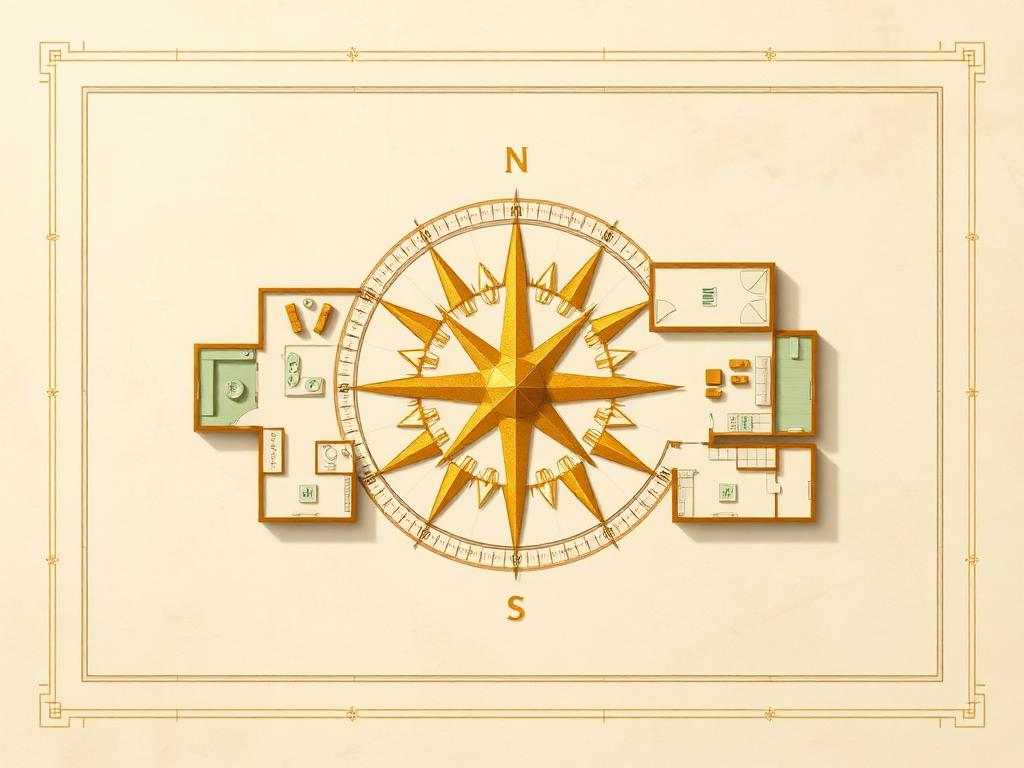
How can Vastu principles be applied to industrial plots and factories in Abu Dhabi?
For industrial plots in Abu Dhabi, such as those in Khalifa Economic Zones (KEZAD) or the Industrial City of Abu Dhabi (ICAD), Vastu application begins with the external boundary and the orientation of the main gate. A successful industrial layout requires placing heavy machinery in the South-West, positioning the administrative block in the North or East, and ensuring the North-East remains open and clean to facilitate clear movement of energy. By aligning the heat-generating processes, such as boilers or furnaces, in the South-East zone, the facility respects the elemental balance of fire and earth within a large-scale structural footprint.
Industrial Vastu differs from residential Vastu because the scale of movement and the weight of equipment are significantly higher. In the context of Abu Dhabi's grid-based industrial planning, developers and business owners must navigate fixed plot boundaries. The goal of a consultation is to work within these parameters to identify the most supportive locations for storage, production, and staff facilities.
The foundation: Plot shape and slope
In the vast industrial landscapes of the UAE, plots are often rectangular or square. Vastu considers these shapes ideal for stability. If a plot has an extension or a cut, it can create an imbalance in the specific elemental sector it occupies. For instance, a missing North-East corner is generally avoided in industrial planning as it is thought to restrict the 'breath' of the site.
The slope of the land is another quiet but influential factor. Ideally, the South and West should be slightly higher than the North and East. In flat desert terrain, this is often managed through the internal flooring levels of the warehouse or factory building itself, ensuring that drainage and energy flow toward the North or East.
Zoning for heavy machinery and raw materials
The South-West is the zone of the Earth element, representing stability and weight. This is the most suitable location for the heaviest machinery, tall silos, or primary storage of raw materials. Placing heavy loads here helps anchor the energy of the business. Conversely, the North-East should be kept as light as possible. Placing heavy waste or scrap in the North-East is a common mistake that can lead to a sense of stagnation in the workspace.
The Fire element: Boilers, furnaces, and transformers
Factories often involve high-energy processes. The South-East is governed by the Fire element. In an Abu Dhabi industrial setup, this is where electrical panels, generators, transformers, and heat-producing machinery should ideally be situated. If the production line requires a furnace, placing it in the South-East corner of the factory floor maintains a natural elemental synergy. If these items are placed in the North-East (Water zone), it creates a clash of elements that can feel disruptive to the daily operations.
Administrative blocks and human energy
While the factory floor is the heart of production, the office block is the brain. For directors and managers in Abu Dhabi industrial units, the cabin is best placed in the South-West corner of the office wing, with the occupant facing North or East. This position is associated with authority and oversight. General staff and sales teams are often more productive in the North or North-West sectors, which are zones associated with movement and communication.
Industrial Vastu checklist for Abu Dhabi units
- Main Entrance: Ensure the gate is located in a positive grid point, ideally in the North or East segments of the boundary wall.
- Water Features: Underground water tanks or cooling systems are best placed in the North or North-East.
- Finished Goods: Store ready-to-ship inventory in the North-West to encourage outward movement and flow.
- Staff Canteen: Best positioned in the South-East or North-West, away from the South-West core.
- Security Guard Cabin: Ideally placed near the gate, but not obstructing the main energy path into the plot.
Who is this for and what does a session feel like?
Vastu for industrial plots is for business owners, factory managers, and property developers who want to ensure their physical environment supports their operational goals. It is particularly useful for those moving into new units in KEZAD or renovating existing warehouses in Musaffah.
During a session with Dr S Pujah, the focus is on the floor plan and the site layout. The process involves a detailed review of the compass orientations and the placement of functional zones. It feels like a technical audit—calm, professional, and practical. You will not be asked to make structural changes that compromise the engineering integrity of the building. Instead, the focus is on the 'Human Energy Architecture,' finding ways to arrange the existing space to be more harmonious. It is not for those seeking quick fixes or magical solutions; it is a systematic approach to spatial alignment.
Numerology and Property Selection
In addition to Vastu, many Abu Dhabi residents look at the numerology of the plot or unit number. Every number carries a specific vibration. For a business, choosing a plot number that aligns with the life path of the founder or the industry type can provide an additional layer of clarity. During an energy consultation, the numerical value of the address is often analyzed alongside the physical layout to provide a comprehensive view of the property's potential.