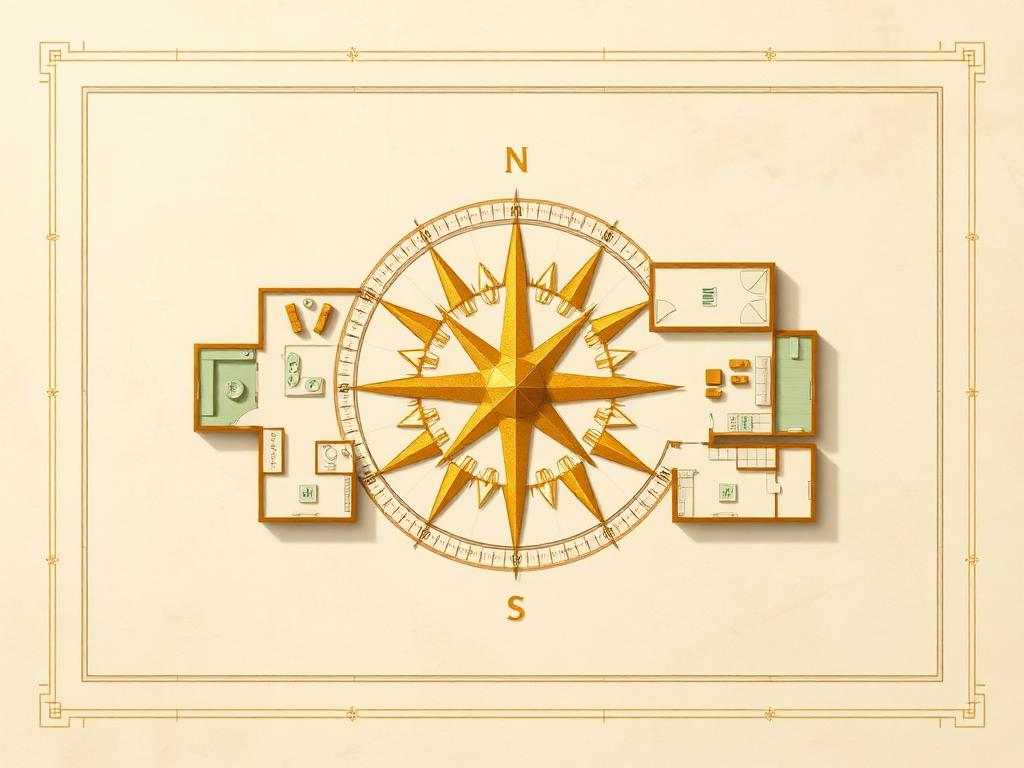
Aligning Your Mirdif Villa with Vastu Energy
Residents in Mirdif often ask how to apply Vastu principles to homes that are already built, especially when structural changes are not an option. In a Mirdif villa, the process involves a systematic review of the flow of movement, the placement of heavy furniture, and the orientation of daily activities relative to the cardinal directions. By observing how natural light and air enter the property, one can identify areas where energy feels stagnant or overly active.
Vastu Shastra is the study of how the five elements—Earth, Water, Fire, Air, and Space—interact within a built environment. In the context of Mirdif’s distinct low-rise, residential character, the focus remains on the 'Vastu Purusha Mandala,' a metaphysical plan that dictates the ideal placement for specific functions like sleeping, cooking, and working.
Understanding the Entrance and Internal Flow
The entrance is considered the mouth of the home through which energy enters. In Mirdif, villas often have specific gate and door alignments dictated by the plot's position within the community. During a session, the exact degree of the entrance is measured to determine its influence on the residents' well-being. If an entrance is not in an ideal zone, the focus shifts to internal balancers, such as specific colors or metal strips, to recalibrate the frequency of the space.
Internal flow is equally important. Many Mirdif homes feature open-plan living areas. Vastu suggests keeping the center of the home, known as the Brahmasthan, open and free from heavy pillars or heavy furniture. This allows the 'Space' element to permeate the rest of the house effectively.
Kitchen and Bedroom Placements
The kitchen represents the 'Fire' element. In the standard layouts of Dubai villas, the kitchen is often pre-assigned. If the kitchen is not in the South-East (the ideal Fire zone), practical adjustments are made using the placement of the stove and the choice of countertop materials. The goal is to ensure the fire element does not conflict with water elements, such as the sink or refrigerator.
For bedrooms, the South-West is generally preferred for the primary occupant, as this direction is associated with the 'Earth' element, providing a sense of stability and groundedness. If a child’s room or a guest room falls in this area, the internal arrangement of the bed—ensuring the head points toward the South or East—becomes the primary tool for alignment.
Integrating Property Astrology and Numerology
Beyond the physical structure, the energetic profile of a home is influenced by the birth charts of its occupants and the numerical vibration of the villa number. Property Astrology examines how the planetary periods of the residents interact with the home's orientation. For example, a resident currently in a Jupiter period may find a North-East facing home particularly resonant.
Numerology adds another layer by analyzing the villa or street number. If a home's number conflicts with the life path numbers of the residents, subtle 'cures' involving specific shapes or number additions near the doorbell can be utilized to harmonize the environment.
A Checklist for Mirdif Homeowners
- Compass Check: Use a precise compass to find the exact North. Do not rely on street orientations, as these can be misleading.
- Clutter Management: Ensure the North-East corner of the villa and the garden is kept clean and light, as this is the zone for mental clarity.
- Heavy Objects: Place heavy cupboards, wardrobes, or decorative statues in the South or West zones to provide 'weight' and stability.
- Water Features: If you have a swimming pool or fountain, these are best situated in the North or North-East sections of the plot.
- Electronic Placement: Keep heavy electrical panels or home theaters in the South-East to align with the heat/fire energy.
Who This Experience is For
This process is designed for individuals who are moving into a new Mirdif property, planning a renovation, or those who feel a sense of stagnation in their current living space. It is for those who seek a deeper understanding of how their physical surroundings impact their internal state. It is not a substitute for architectural engineering, nor is it a quick fix for life's challenges. It is a disciplined approach to environmental harmony.
Vastu for Mirdif Business and Industrial Spaces
For those operating small businesses, workshops, or warehouses near the Mirdif perimeter, Vastu is used to optimize productivity. In a warehouse setting, the placement of raw materials (heavy) versus finished goods (ready for movement) follows the same elemental logic as a home, ensuring that the flow of goods mirrors the natural flow of energy from the North-East to the South-West.