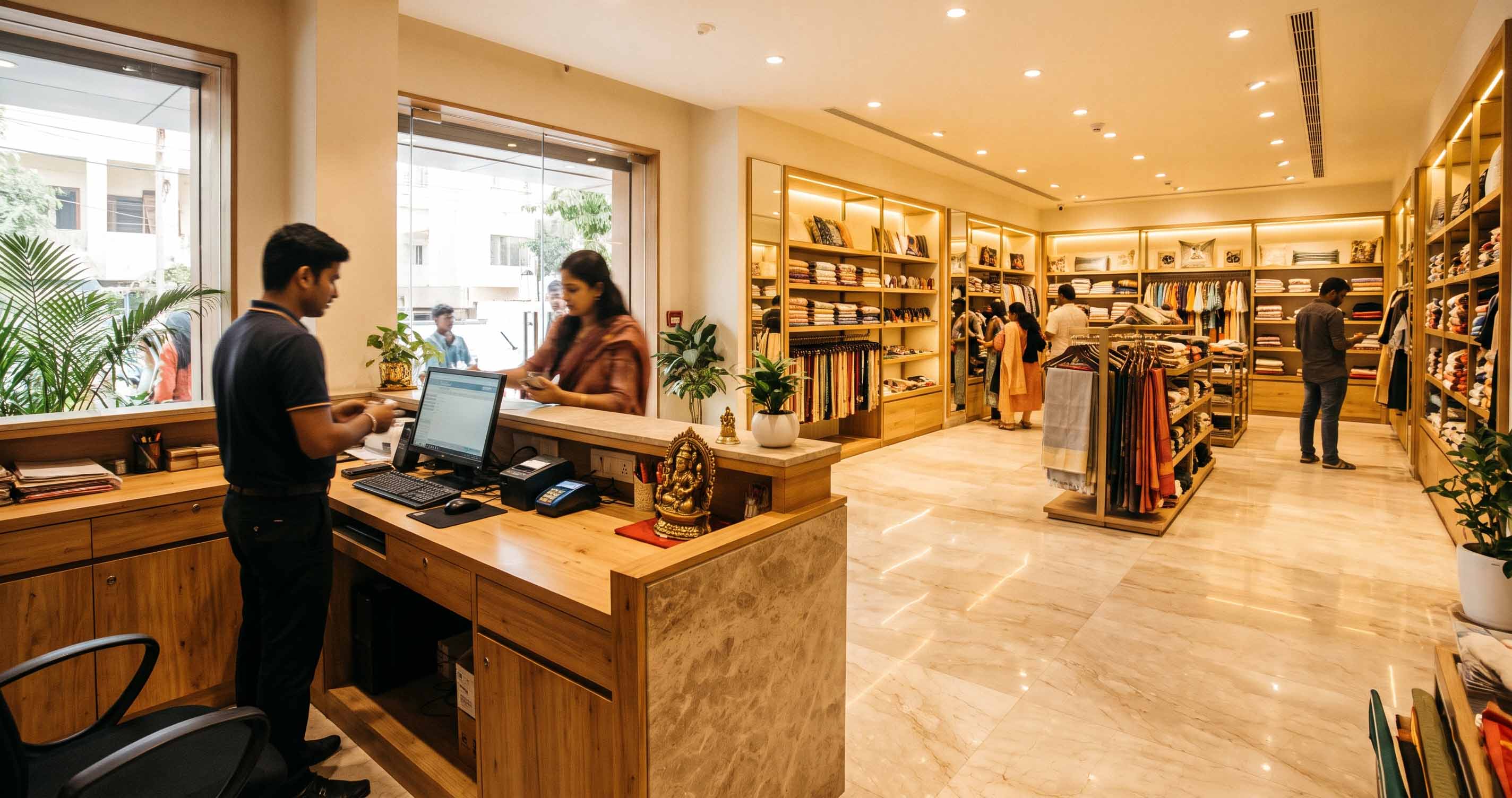
In vastu shastra, a shop's cash counter usually sits in the south-west or south of the floor, with the owner facing north or east, while displays fill the north and east so the entrance feels open and light. Vastu for shops is really about flow: how people enter, move, pause and pay without friction.
I work with many retail owners who sense that something about their space feels off but cannot name it. In this guide I share the principles I use, and I will be honest about what vastu can and cannot do. Dr S Pujah works with clients in person on Sheikh Zayed Road, Dubai, and online with shop and showroom owners in Abu Dhabi and across the GCC and Singapore.
What vastu shastra looks at in a retail space
Vastu shastra is a traditional Indian system of spatial design. It reads a space through directions, the five elements (earth, water, fire, air and space) and the way energy, people and attention move through a room.
In a shop, I look at four things first:
- The entrance: how inviting and unobstructed it feels from the street or mall corridor.
- The cash counter: where money, records and decisions are held.
- The displays: how products are presented and how the eye travels.
- The back of house: storage, staff areas and the quiet zones customers never see.
None of this replaces good merchandising, fair pricing or kind service. Vastu is a lens for order and clarity. When a space feels settled, owners and staff tend to make calmer decisions, and customers tend to linger more comfortably. That is the honest scope of it.
Placing the cash counter
The cash counter is the anchor of a shop. In the traditional view, the south-west is the zone of stability and grounding, so it is the preferred spot for the counter, the safe and important files.
Here is what I usually suggest:
- Position: south-west first, south or west as alternatives. Avoid placing it directly in the north-east corner, which is kept light and open.
- Facing direction: the person at the counter faces north or east. This keeps the owner looking toward the open, active side of the shop.
- Solid back: a wall behind the counter rather than a window or a walkway. It gives a sense of support and makes the person at the till feel less exposed.
- The drawer or safe: placed so it opens toward the north, a traditional symbolic gesture of openness.
- Clear surface: only what you use daily. Old receipts, broken pens and tangled cables create visual noise right where you need focus.
In many mall units in the UAE, the counter position is fixed by the landlord or fit-out rules. That is fine. If you cannot move it, work with what you have: change the facing direction, add a solid panel behind it, and keep the zone tidy and well lit.
Arranging displays and stock
Displays are where vastu for shops becomes very practical. The aim is a space that feels light at the front and grounded at the back.
- North and east walls: lighter, brighter displays, new arrivals and items you want people to discover first.
- South and west walls: heavier shelving, tall cabinets and bulk stock. Weight in these zones is traditionally seen as steadying.
- Centre of the floor: kept as open as possible. In vastu the centre, or brahmasthan, is left free so movement flows around it rather than through clutter.
- Eye level: rotate featured pieces regularly so the display never feels stale or forgotten.
For showrooms with large items, such as furniture, cars or kitchen displays, I suggest grouping the heaviest pieces toward the south-west and leaving a clear walking path from the entrance. A customer should never have to squeeze past something to reach the next section.
The entrance and customer flow
The entrance sets the tone before anyone sees a single product. In vastu shastra, north, east and north-east facing entrances are traditionally favoured, but I never tell anyone to move a shopfront. Most owners simply work with the unit they have.
What you can change easily:
- Keep the threshold completely clear: no boxes, trolleys or delivery cartons left by the door.
- Make sure the door opens fully and smoothly, without catching or squeaking.
- Use warm, even lighting at the entrance so the first step inside feels welcoming.
- Place a clean doormat and a healthy plant or simple display just inside, not blocking the path.
Then walk the shop yourself as a first-time visitor. Where do your feet naturally go? Where do you hesitate? Those small moments of hesitation are often more useful than any compass reading.
Colour, light and the five elements
Each direction carries an element in traditional vastu, and colour is a gentle way to honour it without renovation.
- North (water): soft blues, mirrors, glass shelving.
- East (air and sunrise): fresh greens, natural light, open space.
- South-east (fire): warm accents, good lighting, electronics and display lights.
- South-west (earth): earthy tones, wood, stone, solid furniture.
Light matters more than almost anything. Dim corners tend to become dumping grounds for stock. I encourage owners to light every corner well and to replace flickering bulbs immediately.
Scent is the final layer. I often suggest a light lemongrass blend in a diffuser near the entrance. Its crisp, green note makes the space feel fresh and awake, especially in the afternoons. Keep it subtle so it supports the atmosphere rather than competing with your products.
Common layout mistakes I see
When I review shops and showrooms, the same patterns come up again and again:
- The cash counter wedged beside the entrance with no wall behind it.
- Broken fixtures, dead stock or old signage left in the north-east corner.
- A crowded centre that forces customers to zigzag.
- Mirrors placed directly facing the entrance door, which many vastu practitioners prefer to avoid.
- A storeroom so full that it spills into the shop floor.
Most of these are fixed with an afternoon of reorganising rather than a fit-out. Start with what bothers you most and change one thing at a time so you can notice how the space feels.
A simple weekly routine for your shop
Vastu works best as a habit, not a one-time event. I suggest a short routine owners can share with their team:
- Clear the threshold and wipe the door every morning.
- Reset the cash counter at closing: drawer organised, surface clear.
- Once a week, walk the floor and remove anything broken, faded or out of place.
- Refresh one display each week so the space feels alive.
- Open the space to fresh air when possible and refresh the diffuser.
These steps cost almost nothing and make the shop feel cared for. People notice that care, even if they cannot explain why.
Whether your shop is in Dubai or your showroom is in Abu Dhabi, where I support clients online, the next step is the same: a careful look at your actual floor plan. If you would like a personal review of your counter, displays and flow, you can book a vastu consultation for your shop or showroom and we will walk through it together.