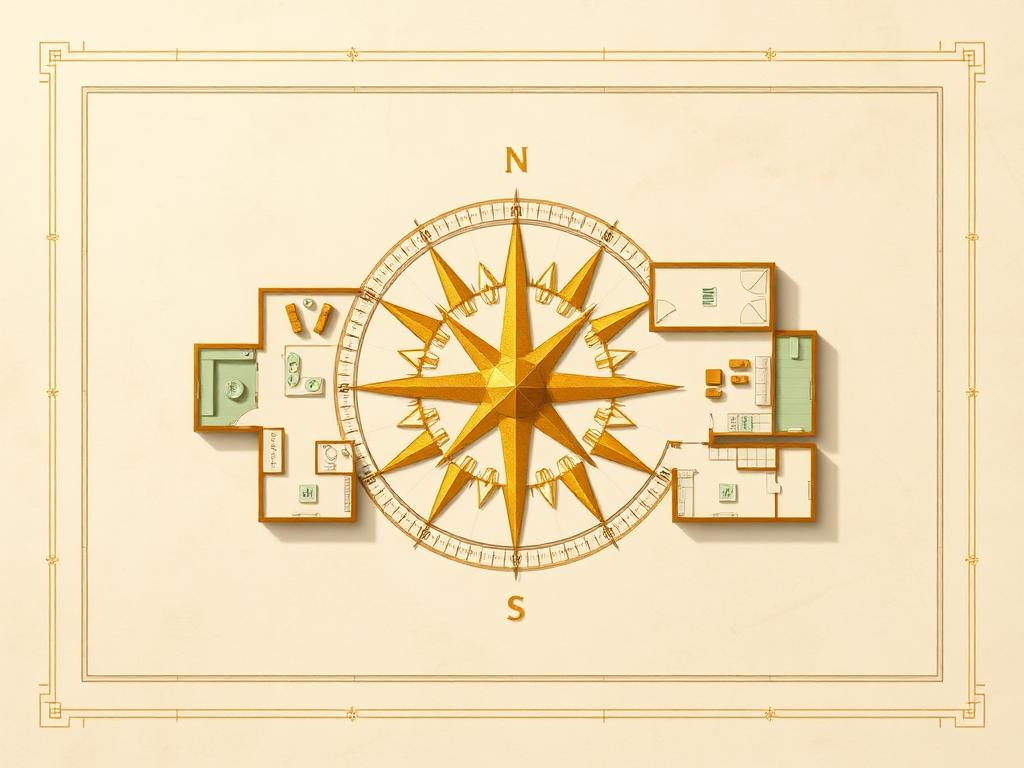
Vastu for home in a Dubai apartment comes down to twelve simple checks: the entrance, living room, kitchen, dining space, bedrooms, study, bathrooms, a quiet corner, the centre and the balcony. You cannot move walls in a rented flat, but you can adjust placement, light, direction and order, one room at a time.
How to use vastu for home in an apartment
Vastu shastra is a traditional Indian approach to arranging a living space by direction, light and the five elements. It was written for independent houses on open land, so an apartment on the thirtieth floor of a tower needs a practical reading, not a rigid one.
Before you begin, stand in the middle of your flat with a compass app and note where north lies. Sketch the floor plan on paper and mark the eight directions around it. Everything below refers to that sketch.
I read vastu as a way of paying attention to how a home supports your daily routine. It is a tradition of placement and order, not a promise of any particular result.
Entrance and living room: checks 1 to 3
1. The main door
Tradition favours an entrance facing north, east or north-east. In a tower you rarely get to choose, so work with what you have. Keep the door clean, well lit and able to open fully. Clear the shoe pile, move the rubbish bin away, and fix a squeaking hinge or a dim corridor bulb.
2. The first view
Open the door and notice what you see in the first three seconds. A calm wall, a plant or a simple artwork sets the tone. Vastu tradition advises against a mirror directly facing the entrance, and against a view straight into a bathroom or a cluttered store cupboard.
3. The living room
The north and east sides of a home are traditionally kept lighter and more open. Place heavier pieces, such as the sofa and cabinets, along the south and west walls, and seat yourself so that you face north or east when hosting. Leave the north-east corner free of bulky furniture where you can.
Kitchen and dining: checks 4 and 5
4. The kitchen
The south-east is the traditional home of fire, so it is the favoured place for cooking. Apartment kitchens are fixed, which means your adjustment is about how you use them:
- Face east while cooking if the layout allows it.
- Keep a little distance between the hob and the sink, since fire and water are traditionally kept apart. Where they sit side by side, a wooden board between them is a common adjustment.
- Clear the counters each night and empty the bin before it overflows.
5. The dining space
Give meals a proper place, even if it is a two-seat table by the window. Tradition suggests facing east or north while eating. Keep the table clear of laptops and post, and avoid a seat that looks directly at a bathroom door.
Bedrooms: checks 6 to 8
6. The main bedroom
The south-west is the traditional position for the main bedroom, because it is associated with stability. If yours sits elsewhere, focus on the bed. Vastu tradition recommends resting with your head towards the south or east and advises against the head pointing north.
7. Around the bed
Small details shape how a bedroom feels at the end of the day:
- A solid headboard against a solid wall, not under a window where possible.
- No mirror reflecting the bed. A wardrobe mirror can be covered with a light curtain at night.
- Nothing forgotten under the bed. If you must store things there, keep them tidy and few.
- Work files, laptops and chargers kept out of the room, or at least out of sight.
8. Children's and guest rooms
The west and north-west are the traditional choices for these rooms. For a child, the desk matters most: position it so they face east or north while studying, with a wall behind the chair and shelves that are not looming overhead. Keep toys in closed storage so the floor is clear by evening.
Work, water and stillness: checks 9 to 11
9. The home office or study corner
Many Dubai residents work from a corner of the living room or a spare bedroom. Sit facing north or east, with a solid wall behind you and a clear view of the door. Avoid working with your back to the entrance of the room, and keep the desk surface clear enough to see the wood.
10. Bathrooms
Tradition places bathrooms in the west or north-west and prefers them away from the north-east. You cannot relocate one, so manage it well: keep doors closed and lids down, repair dripping taps promptly, run the extractor fan, and keep the space dry and fresh.
11. A quiet corner
The north-east is considered the most refined part of the home, and is the traditional place for prayer, meditation or quiet reading. It does not need a whole room. A shelf, a cushion and a lamp are enough. Keep this corner clean, light and free of storage boxes.
Centre and balcony: check 12
12. The centre of the home and the balcony
The centre, known as the Brahmasthan, is traditionally left open. In an apartment this is often a hallway or the middle of the living area. Keep it free of heavy furniture and avoid stacking boxes there.
Then look outwards. A balcony is your link to natural light and air, so do not let it become a storeroom for suitcases and drying racks. With the strong western sun in Dubai, sheer blinds and a few hardy plants soften the afternoon glare without closing the home off.
What you can change in a rented flat
Most residents here rent, and structural changes are not an option. That is perfectly fine. The adjustments that matter most are the ones you control:
- Where the bed, desk and sofa sit, and which way you face when using them.
- Lighting, especially in the entrance and the north-east.
- Colour through cushions, rugs and curtains instead of paint.
- Clutter, which is the single most common issue I see in apartments.
- Small repairs: taps, hinges, bulbs and broken clocks.
Please do not approach this with fear. A home that misses several traditional placements can still feel settled and well ordered. Choose three checks from this list, complete them this week, and notice how the rooms feel to live in.
When a personal reading helps
A checklist gives you the general principles. A personal reading looks at your actual floor plan, the direction your flat faces and how your household uses each room, which is useful when you are choosing between two apartments or setting up a new one.
If you would like that level of detail, you can book a vastu consultation for your home. Bring your floor plan and your compass reading, and we will go through it room by room.