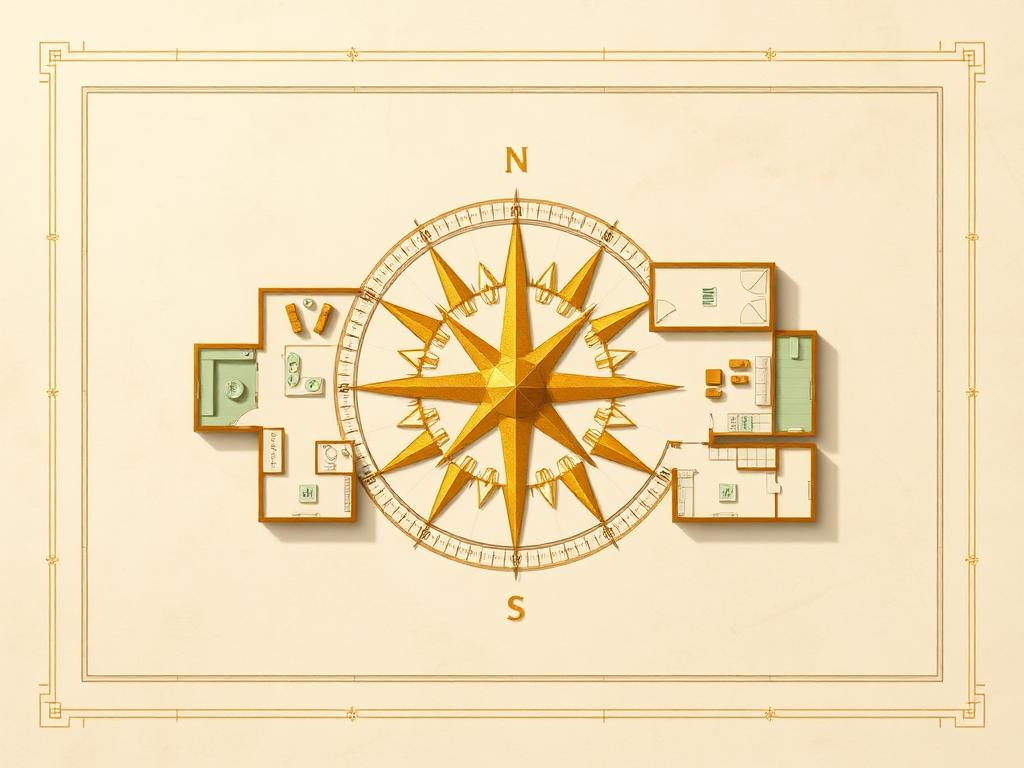
Vastu for office spaces comes down to three placements: where you sit, where people enter and where visitors are received. Tradition suggests a desk in the south-west with a solid wall behind you, a clear, well-lit door towards the north or east, and an open, uncluttered reception close to the entrance.
Why vastu for office layouts starts with three placements
Vastu shastra is a traditional Indian system of design that links directions, light and the use of space. A full study of a workplace looks at many things, but when I walk into an office for the first time I always begin with the same three: the desk, the door and the reception.
The reason is practical. These are the points where attention gathers. The desk is where decisions are made. The door is where the day begins and ends. The reception is where a visitor forms a first impression before anyone has spoken. If these three are settled, the rest of the layout becomes much easier to arrange.
I offer what follows as tradition and as good spatial sense, not as a promise of results. Vastu will not do your work for you. What it can do is help you arrange a room so that it supports focus, order and a sense of welcome.
Find your directions first
Before moving a single chair, find out which way your office faces. Stand in the centre of the space with a compass, or the compass on your phone, away from large metal furniture and electronics. Note north, then mark the eight directions on a simple sketch of the floor plan.
Two points save a great deal of confusion:
- The facing of an office is taken from its main entrance, looking out.
- In a tower, your own unit matters more than the building's lobby. Work with the door you actually control.
Keep the sketch. You will use it for every decision below.
Desk placement: where you sit and what you face
In vastu, the south-west is associated with stability, so it is traditionally given to the person who leads the business. If you are the owner or the head of the office, this is the classical position for your cabin or desk.
The guidelines I use most often are these:
- Face north or east while working. North is traditionally linked with opportunity and east with clarity and new beginnings.
- Keep a solid wall behind you. A wall at your back is a classic symbol of support. A window or a walkway behind the chair tends to pull your attention over your shoulder.
- See the door without sitting in line with it. You should be able to notice who enters without being directly in the path of the doorway.
- Avoid sitting under an exposed beam. If it cannot be avoided, shift the chair slightly so the beam is not directly overhead.
- Choose a regular shape. Square and rectangular desks are preferred over irregular or sharply angled ones.
- Leave open space in front of you. A little clear floor ahead of the desk symbolises room to grow, and it simply feels better than facing a wall at arm's length.
For teams, tradition places people who deal with accounts towards the north, and those in sales or outreach towards the north-west. Use these as starting points. On an open-plan floor, the direction each person faces is usually easier to adjust than the zone they sit in.
Door placement: the entrance and your own cabin door
The main door is given great importance in vastu because it is where everything arrives. Traditionally, entrances in the north, north-east and east are preferred. Many offices do not have that choice, and that is fine. The condition of a door matters as much as its direction.
- Let it open fully. A door that catches on a cabinet, a carton or a coat stand sends a small message of obstruction every time someone walks in.
- Light it well. A bright, even entrance is welcoming at any hour.
- Keep it quiet and sound. Fix squeaking hinges, loose handles and chipped frames.
- Name it clearly. A clean, legible nameplate or sign tells visitors they have arrived at the right place.
- Clear the threshold. Shoes, bins and delivery boxes belong elsewhere.
- Mind what faces it. Ideally the entrance does not look straight at a washroom door or a storage area.
The same thinking applies to your own cabin door. It should open inward easily, and you should not have your back to it while you work.
Reception placement: the first impression
Reception is where your office introduces itself. In vastu it is traditionally located in the east or north-east part of the premises, near the entrance, with the receptionist facing north or east while greeting visitors.
A few details make a noticeable difference:
- Place the reception desk to one side of the entrance instead of directly in line with the door, so a visitor steps into space first and is greeted second.
- Keep the counter low enough to feel approachable and tidy enough to feel organised.
- Seat waiting guests in the north-west or along a side wall, where they can see the room without being in the walkway.
- Display the company name or logo on a solid wall behind the reception desk; tradition favours the south or west wall of the area.
- Choose fresh flowers or a well-kept plant over a crowded display, and remove anything dried, broken or dusty.
The north-east is considered the lightest zone in vastu, so keep it open. Heavy cabinets, archive boxes and stacked stationery are better stored in the south or west.
When you cannot move anything
Most of the people I speak with in Dubai work in leased offices, serviced suites or shared floors. Walls and doors are fixed. That does not put vastu out of reach. It simply changes where you look.
- Turn the chair. If the desk must stay, change the direction you face.
- Create a back. A high-backed chair, a screen or a low bookcase behind you can stand in for a wall.
- Use light. A warm lamp brightens a dim entrance or a dull corner.
- Edit the clutter. Clearing the north-east and the doorway costs nothing.
- Work with your own square metre. In a co-working space, apply the same principles to your desk alone.
A simple walk-through for this week
- Sketch your floor plan and mark the eight directions.
- Stand at the entrance as a visitor would and write down the first three things you notice.
- Check that the main door opens fully and is well lit.
- Sit at your desk and note what is behind you, above you and in front of you.
- Look at the reception from the door: is the greeting clear and the counter tidy?
- Make one change in each of the three areas, then live with it for a fortnight before changing more.
Small, considered adjustments are easier for a team to accept than a complete rearrangement, and they let you notice honestly what feels different.
Every office has its own plan, facing and constraints, so general guidelines only go so far. If you would like your own layout looked at, you can book a vastu consultation for your office and we will go through your desk, door and reception placement together.